HAMIZA – Endorser of Charter 4 Change Uganda
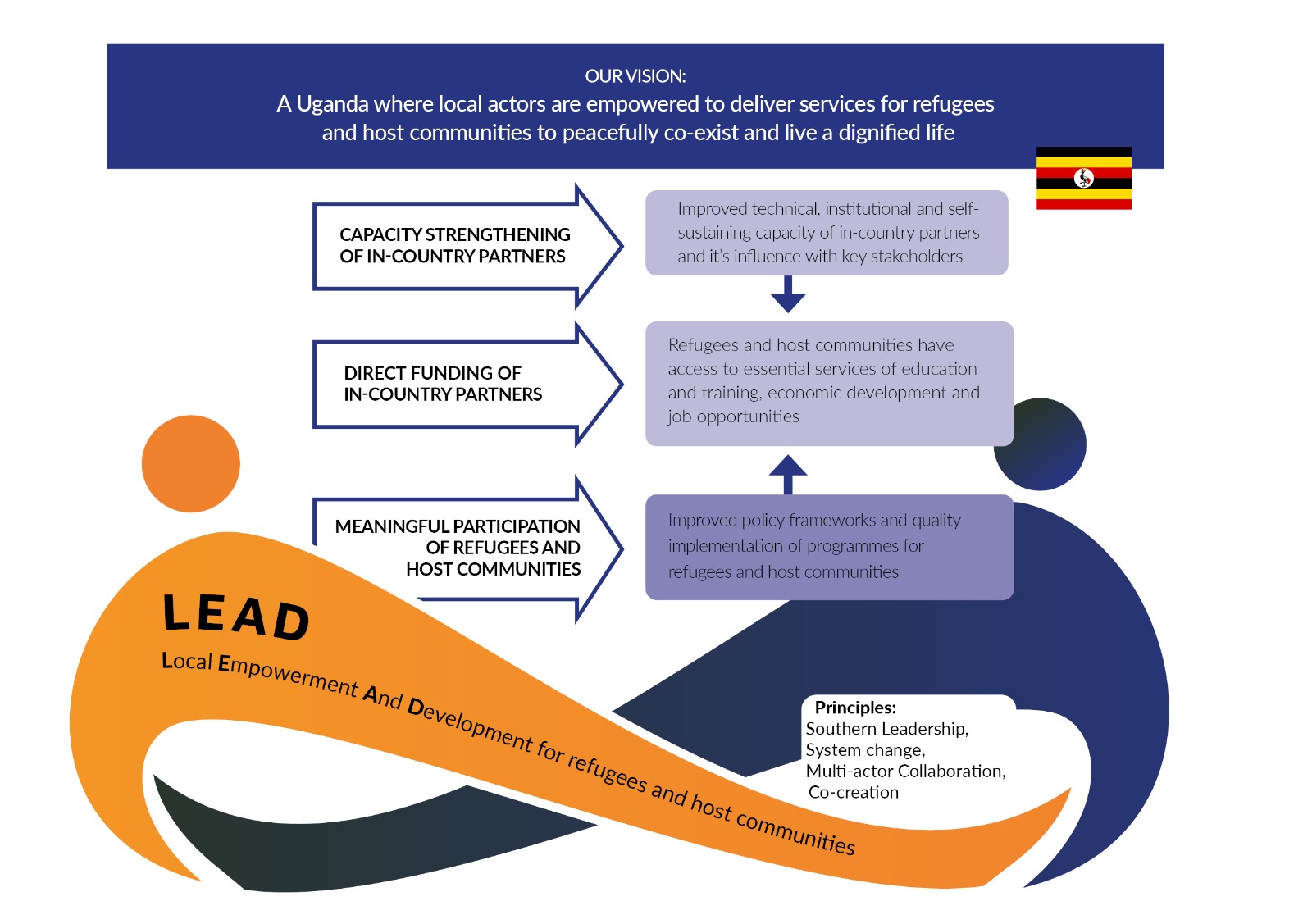
For years, "localisation"was a word in proposals. Then the LEAD Project came and it became practice. When Woord en Daad, through the Dutch Ministry of Foreign Affairs, made a deliberate choice to trust Hamiza Development Foundation (HDF) to co-design a project fit for our context and capacity, something shifted. That choice gave birth to the CREST-LEAD Project in Kyaka II refugee settlement. It proved one thing: When those choices are right, outcomes change.
Real localisation begins when communities and local organisations are not just consulted, but are decision-makers. At HAMIZA we moved from delivering donor templates to co-designing with women, youth, VSLAs, farmer groups, adolescent girls and boys, and local leaders. Local problems need local solutions, designed by local people. What moved the needle was multi-year, flexible funding through LEAD. That flexibility let us invest in staff, financial systems, safeguarding, MEAL, and leadership. Flexible, multi-year funding builds institutions, not just projects. LEAD lets us adapt when rains fail and scale what works without waiting for new approval.
Community accountability changed what we measure. Donor metrics count outputs from logframes, while communities measure change. If the community doesn’t feel the change, the numbers don’t matter. HDF added community-defined indicators like confidence, social cohesion, and household resilience—indicators that respond to real lives.
LOCALISATION IS NOT ISOLATION. No organisation succeeds alone. Coalitions, partnerships, associations, and movements create opportunities to share tools, pool resources, mobilise collectively, and amplify voices on policy.
LOCALISATION is about principles, not prescriptions:
• Shift power.
• Fund flexibly.
• Invest in capacity.
• Be accountable to communities.
• Build networks
These principles work in any context. They reduce costs, increase sustainability, strengthen local systems, reduce dependence on external management, and ensure benefits last long after funding ends while creating faster learning.
Real localisation begins when communities and local organisations are not just consulted, but are decision-makers. At HAMIZA we moved from delivering donor templates to co-designing with women, youth, VSLAs, farmer groups, adolescent girls and boys, and local leaders. Local problems need local solutions, designed by local people. What moved the needle was multi-year, flexible funding through LEAD. That flexibility let us invest in staff, financial systems, safeguarding, MEAL, and leadership. Flexible, multi-year funding builds institutions, not just projects. LEAD lets us adapt when rains fail and scale what works without waiting for new approval.
Community accountability changed what we measure. Donor metrics count outputs from logframes, while communities measure change. If the community doesn’t feel the change, the numbers don’t matter. HDF added community-defined indicators like confidence, social cohesion, and household resilience—indicators that respond to real lives.
LOCALISATION IS NOT ISOLATION. No organisation succeeds alone. Coalitions, partnerships, associations, and movements create opportunities to share tools, pool resources, mobilise collectively, and amplify voices on policy.
LOCALISATION is about principles, not prescriptions:
• Shift power.
• Fund flexibly.
• Invest in capacity.
• Be accountable to communities.
• Build networks
These principles work in any context. They reduce costs, increase sustainability, strengthen local systems, reduce dependence on external management, and ensure benefits last long after funding ends while creating faster learning.
Gallery